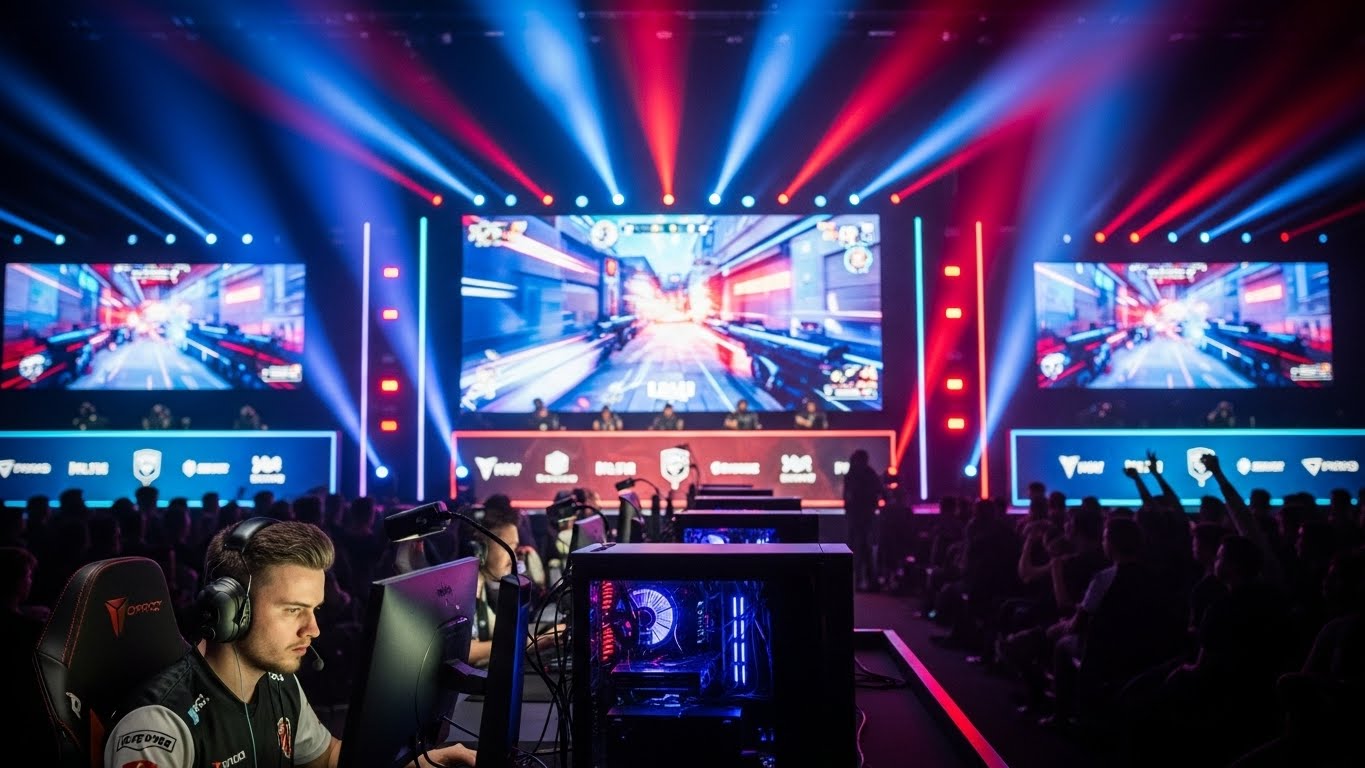

Introduction: A New Age of Competition
In the 21st century, few industries have risen as rapidly or dramatically as esports. No longer a niche pastime for hobbyists, competitive gaming has evolved into a legitimate global spectacle that challenges the very definition of sport. With millions of fans, multimillion-dollar tournaments, corporate sponsorships, and athletes who dedicate their lives to perfecting their craft, esports represents not just a cultural shift but a reimagination of what it means to compete in the digital era.
As society increasingly intertwines with technology, esports is leading a new frontier. It goes beyond mere entertainment, transforming into a phenomenon that impacts education, business, mental health, and even national identity. This blog takes a deep dive into the complex, electrifying world of esports—its origins, rise, influence, struggles, and where it is heading.
The Humble Origins of Esports
Before global championships and stadiums filled with roaring fans, esports started in far more modest environments. The earliest forms of competitive gaming date back to the 1970s and 1980s, when arcade games like Space Invaders and Pac-Man attracted crowds eager to beat high scores. These competitions, although informal, were a precursor to what would eventually become organized digital contests.
In 1980, Atari hosted the Space Invaders Championship, which attracted over ten thousand participants in the United States. This marked one of the first large-scale gaming competitions. However, it wasn’t until the rise of personal computers and home consoles in the 1990s that the esports scene began to solidify. Titles like StarCraft and Counter-Strike gained cult followings, especially in regions like South Korea and Northern Europe, where competitive scenes began to take shape.
The early 2000s introduced online multiplayer and broadband internet to the masses, accelerating the growth of competitive communities. LAN parties gave way to online ladders, and suddenly, players from around the world could compete without ever leaving their rooms. This connectivity became the bedrock of modern esports.
The Esports Explosion: Games That Shaped an Industry
The rise of esports is closely tied to the success of specific game titles. While many games support competition, only a few have had the profound influence necessary to shape the ecosystem.
StarCraft: Brood War, particularly in South Korea, was more than a game—it became a national pastime. Professional teams, sponsored by major corporations, battled on television, and top players became celebrities.
Counter-Strike, with its tactical gameplay and team-based combat, introduced fans to intense, round-based matches that tested communication, reflexes, and strategy. It quickly became a cornerstone of first-person shooter esports.
Dota 2 and League of Legends, both Multiplayer Online Battle Arenas (MOBAs), redefined the scale of esports. Their complex mechanics and team synergy made them ideal for long tournaments and deep fan engagement. Valve’s The International, Dota 2’s premier event, regularly boasts some of the largest prize pools in esports history.
Fortnite, though a newer title, brought mainstream attention with its Battle Royale format and crossover appeal to younger audiences and celebrities alike. Its flashy tournaments and integration with pop culture expanded the demographic reach of esports.
These games are just a sample, but they demonstrate how gameplay design, community support, and developer involvement contribute to a title’s esports potential.
Building the Esports Ecosystem
Modern esports is a multi-layered ecosystem involving several key players. At the center are the professional players and teams, often backed by organizations that handle everything from contracts and salaries to health and training. These teams compete in leagues or tournaments either organized by the game’s developer or third-party event organizers.
Tournaments and Leagues vary in structure. Some use an open-circuit model where anyone can qualify, while others are franchise-based with permanent slots for selected teams. Franchised leagues, like those in Overwatch and League of Legends, mirror traditional sports with seasonal play, regional divisions, and playoffs.
Coaches and Analysts play increasingly important roles, studying opponents, creating strategies, and supporting players mentally and emotionally. The backroom of a top-tier esports team now resembles that of any elite sports club.
Broadcasters and Commentators bring matches to life, explaining tactics and building narratives. Production quality has improved significantly, with multi-camera setups, instant replays, and graphics that rival sports broadcasting.
Sponsors and Investors are the financial backbone. Brands in energy drinks, computer hardware, apparel, and even car manufacturers see esports as a key marketing channel. This funding helps tournaments grow in size and professionalism.
Fans and Communities are the lifeblood of esports. They contribute not just as spectators but as content creators, forum moderators, and even amateur players who keep grassroots scenes alive.
The Life of a Pro Esports Athlete
The life of a professional gamer is demanding and often misunderstood. The stereotype of a lazy gamer has long been shattered by the discipline required to compete at the highest level. Pro players often practice upwards of eight to ten hours a day, reviewing footage, scrimming with other teams, and maintaining peak mental and physical health.
Training Routines include aim drills, strategy sessions, fitness workouts, and diet regulation. Reaction time, decision-making speed, and stress management are crucial. Some teams even hire psychologists and wellness coaches to keep players mentally resilient.
Age Limits and Career Lengths are another reality. Most esports pros peak in their early to mid-20s, as reflex speed and hand-eye coordination are vital. Careers tend to be short compared to traditional sports, leading many to transition into coaching, content creation, or business roles afterward.
Burnout and Pressure are common. With high stakes, public scrutiny, and intense schedules, players often face anxiety, sleep disorders, and burnout. Addressing mental health is a growing concern within the industry.
Cultural Impact and Global Reach
Esports is no longer confined to a single region or demographic. It’s a global phenomenon that resonates with millions across diverse cultures and languages. In countries like South Korea, China, and Sweden, esports enjoys national recognition, while in regions like Southeast Asia, Brazil, and the Middle East, it is emerging as a major form of youth engagement.
National Pride and Representation often surface in international tournaments where teams or players represent their countries. These events can foster a sense of unity and competition similar to the Olympics.
Crossover with Traditional Sports is also on the rise. Football clubs, basketball teams, and even F1 racing teams have launched their own esports divisions. This blending of traditional and digital sports has led to collaborations, shared infrastructure, and cross-promotion.
Educational Integration is another sign of esports legitimacy. Schools and universities now offer esports scholarships, degrees in game design or event management, and varsity teams that compete in collegiate leagues.
The Business of Esports
As esports matures, its economic footprint continues to grow. Revenue comes from multiple sources including sponsorships, media rights, ticket sales, merchandise, and in-game purchases. Some events fill stadiums, while others draw millions of online viewers.
Media Rights have become a hot commodity. Just as television networks bid for football or basketball rights, streaming platforms and broadcasters now compete to air esports events. Exclusive deals bring significant revenue and exposure.
Franchising Models allow organizations to buy permanent slots in a league, ensuring a steady stream of income and stability. However, the high cost of entry can also limit opportunities for smaller teams.
Brand Collaborations are increasingly common. Major non-endemic brands—those not traditionally associated with gaming—are entering the space to reach younger, tech-savvy audiences. This includes food chains, fashion labels, and auto manufacturers.
Startups and Innovation in analytics, AI-based coaching tools, virtual reality training, and fan engagement platforms continue to push the envelope. Esports is not just entertainment—it’s a testing ground for new tech.
Challenges and Controversies
Like any fast-growing industry, esports faces its share of challenges. From issues of governance to ethical concerns, the road to maturity is complex.
Lack of Regulation is a major issue. Unlike traditional sports with governing bodies, esports lacks a universal regulatory authority. Rules vary widely between games and regions, leading to inconsistency.
Gender Disparity remains a concern. Despite many talented female gamers, the top tiers are still male-dominated. Efforts are being made to create more inclusive spaces, but the journey is ongoing.
Toxicity and Harassment in gaming communities can deter new players and fans. Developers and platforms are working to create safer environments, but moderation and cultural change are needed.
Cheating and Match Fixing have marred several high-profile tournaments. Maintaining competitive integrity is crucial to the industry’s credibility.
Sustainability of Career Paths for players is also in question. With short career spans and limited job security, many athletes face uncertainty after retirement.
The Future of Esports
As we look ahead, the trajectory of esports shows no sign of slowing. It is poised to continue its transformation and expansion into new territories, demographics, and formats.
Mobile Esports is exploding in popularity, especially in regions where high-end PCs or consoles are less accessible. Games like PUBG Mobile and Mobile Legends have brought competitive gaming to the masses.
Virtual Reality and Augmented Reality may open new dimensions for gameplay and viewership. Imagine tournaments where players physically move in arenas while fans watch in real-time from immersive perspectives.
Decentralization and Blockchain may play a role in funding tournaments, rewarding fans, and creating new economies within games. Digital collectibles, NFTs, and token systems could redefine fan interaction.
Global Esports Federations might eventually form to standardize rules, protect players, and oversee international events. This would enhance the sport’s credibility and long-term sustainability.
Conclusion: More Than a Game
Esports is far more than competitive gaming. It is a cultural force, an economic powerhouse, a path for young people to find identity, opportunity, and expression. It is a digital sport for a digital age, demanding the same discipline, passion, and talent as any physical contest.
From the arcade halls of the 1980s to the stadiums and streaming platforms of today, esports has defied expectations. It has built communities across continents, united fans under shared goals, and inspired millions to pick up a controller or mouse in pursuit of greatness.
As the line between physical and digital continues to blur, esports stands at the intersection of entertainment, innovation, and identity. And whether you’re a player, a fan, or just curious, there’s never been a better time to step into the arena. The game is on, and the future is now.