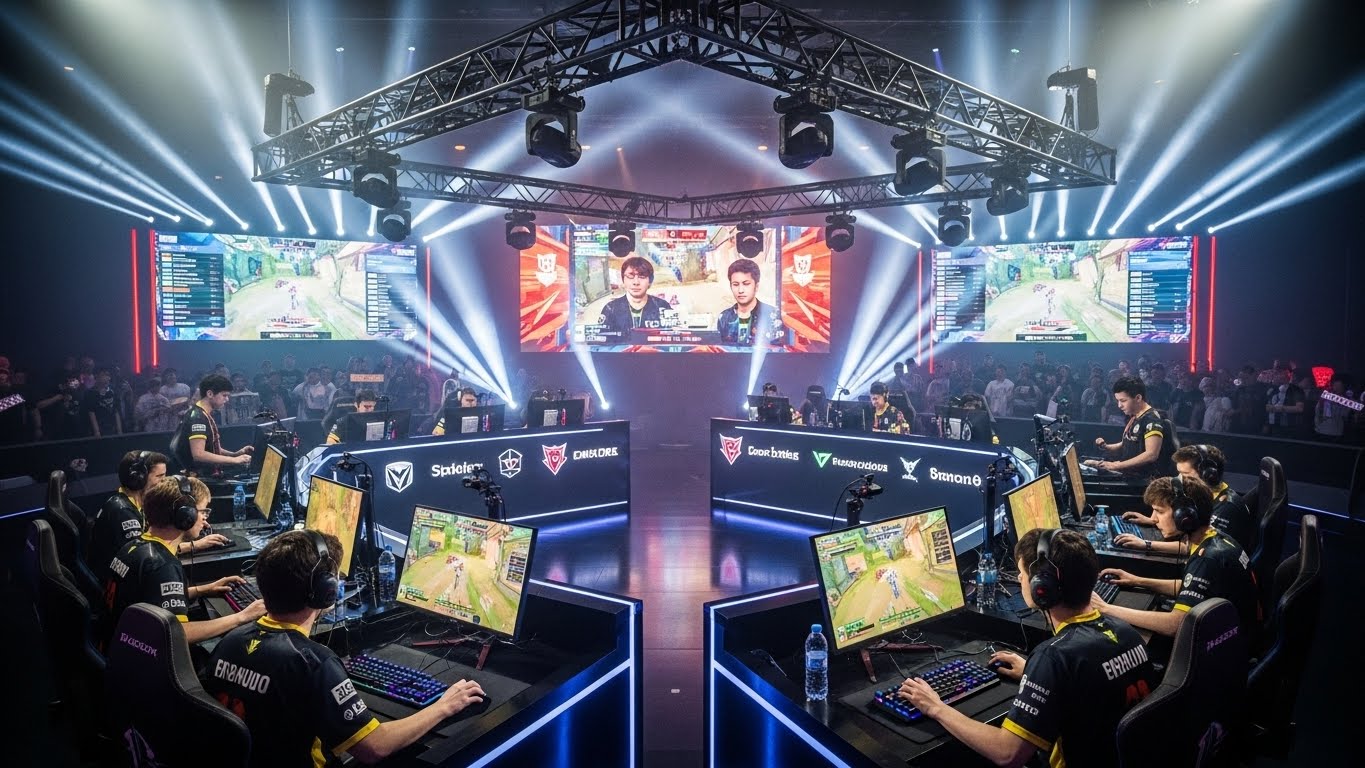
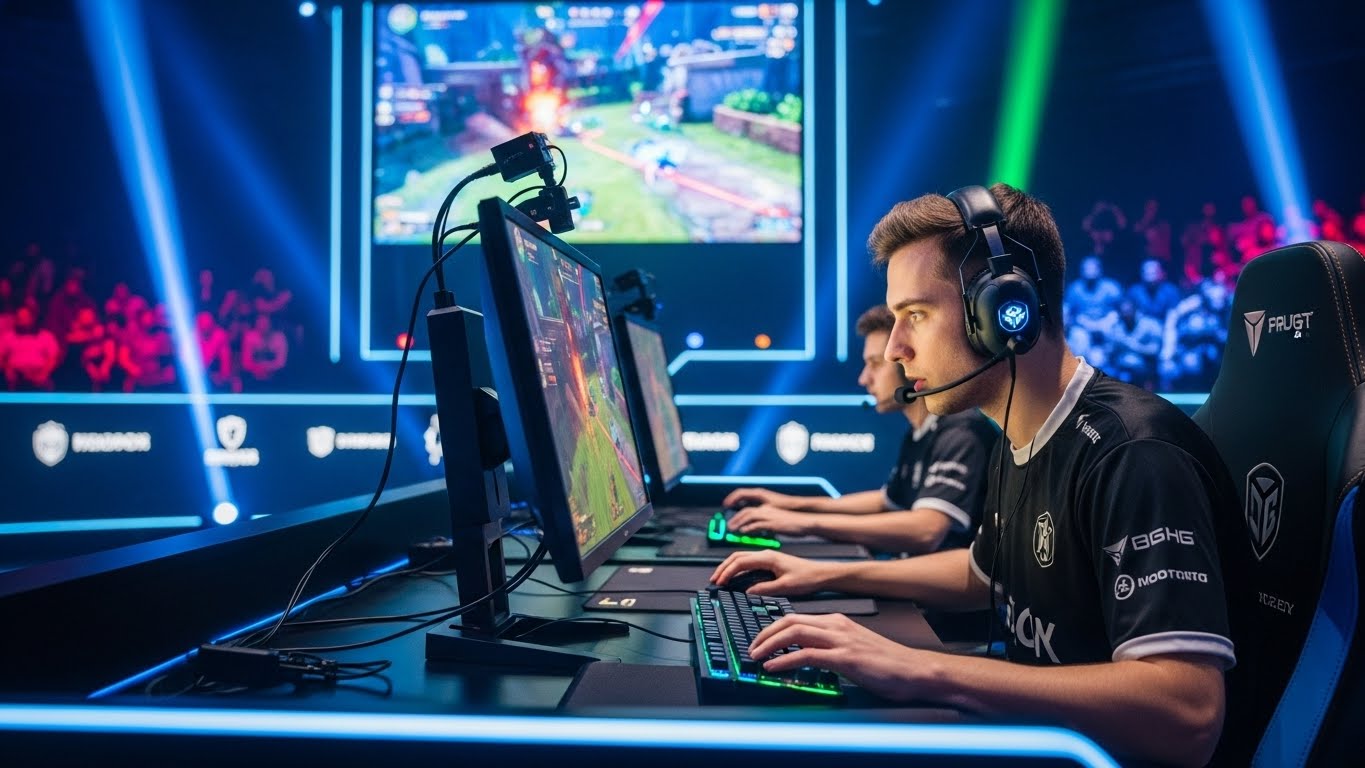
Esports, short for electronic sports, is a booming industry that has grown exponentially over the past few years, attracting millions of viewers and billions of dollars in revenue. What started as casual gaming has now evolved into a massive global phenomenon, with professional teams, leagues, sponsors, and a dedicated fanbase. In this blog post, we’ll dive deep into the evolution of esports, its impact on traditional sports, the players and teams that dominate the scene, and what the future holds for this digital revolution.
The Evolution of Esports: From Casual Gaming to Global Phenomenon
In the early days of video games, competitive play was mostly confined to local arcades or friendly online competitions. The concept of esports began to take shape in the late 1990s and early 2000s with games like StarCraft and Quake, where players from different regions could connect online and compete against each other in real-time. These competitions started to attract attention, and small-scale tournaments began to pop up across the world.
However, the true turning point for esports came with the rise of League of Legends in 2009. Developed by Riot Games, League of Legends (LoL) was one of the first games to offer a deeply immersive experience and the framework for competitive play. It also introduced a freemium model, which allowed players to download and play the game for free while offering in-game purchases for cosmetic items. This made the game accessible to a vast audience, which helped foster the growth of esports.
From there, other games like Dota 2, Counter-Strike: Global Offensive, and Overwatch followed suit, each contributing to the industry in unique ways. Today, there are a wide variety of esports titles that cater to different types of players and fans, from First-Person Shooters (FPS) like Call of Duty to Massively Multiplayer Online Role-Playing Games (MMORPG) like World of Warcraft.
The Business of Esports: A Multi-Billion Dollar Industry
Esports is no longer just a hobby for gamers; it has become a legitimate business. According to industry reports, the global esports industry was valued at over $1 billion in 2020 and is expected to surpass $1.6 billion by 2023. The primary revenue sources for esports include sponsorships, media rights, merchandise sales, ticket sales for live events, and, of course, streaming platforms like Twitch and YouTube Gaming.
Sponsorships are a huge driver of revenue in the esports world. Major brands like Coca-Cola, Intel, Pepsi, and Red Bull have invested heavily in esports teams, tournaments, and events. These companies see esports as an opportunity to connect with younger, tech-savvy audiences who are increasingly difficult to reach through traditional advertising channels.
Media rights are another significant revenue stream. Networks and streaming platforms, especially Twitch, YouTube, and Facebook Gaming, have secured exclusive broadcasting rights for major esports events. For example, the League of Legends World Championship and The International Dota 2 Championship draw millions of viewers from across the globe, making them a goldmine for advertising and sponsorships.
Merchandise and ticket sales for live events also contribute to the growing revenue pool. As esports fans become more passionate about their favorite teams and players, merchandise sales for jerseys, hats, and other fan gear continue to rise. In fact, many esports tournaments now sell out arenas, such as the League of Legends World Championship, which has been hosted in massive venues like the Staples Center in Los Angeles and the Bird’s Nest in Beijing.
The Esports Ecosystem: Players, Teams, and Tournaments
At the heart of esports is the ecosystem of professional players, teams, coaches, analysts, and tournament organizers who make it all possible. Professional esports players are the athletes of this digital world, dedicating hours of practice and strategy to hone their skills in order to compete at the highest level. While esports may not require the same physical stamina as traditional sports, the mental acuity, reflexes, and teamwork involved in competitive gaming demand just as much dedication.
Esports players often start young, sometimes as early as 12 or 13 years old, honing their skills in online matches before joining semi-professional or professional teams. Players in games like League of Legends, CS:GO, and Valorant may spend upwards of 10 hours a day practicing, reviewing replays, and developing strategies for their next match. This level of commitment is crucial for competing in high-stakes tournaments, where the prize pools often reach into the millions of dollars.
Esports teams have become an integral part of the industry, and many of them are backed by investors, brands, and even traditional sports organizations. Teams like Team Liquid, Cloud9, FaZe Clan, and G2 Esports are some of the biggest names in the business, fielding multiple teams across different game titles. These organizations not only focus on recruitment and training but also manage player contracts, sponsorship deals, and marketing efforts.
The competitive structure of esports revolves around tournaments and leagues. These events are often held both online and in large, live venues, where fans can watch their favorite teams battle it out in real-time. Some of the most well-known esports tournaments include The International (Dota 2), League of Legends World Championship, The Overwatch League, and DreamHack. These events attract millions of viewers from all over the world and offer massive prize pools, with some tournaments reaching up to $40 million in prize money.
In addition to these major events, there are countless smaller tournaments and regional leagues that offer rising players a chance to break into the professional scene. Valorant Champions Tour and PUBG Mobile Global Championship are just a few examples of how the ecosystem of esports supports both established stars and up-and-coming talent.
Esports and Traditional Sports: A Symbiotic Relationship
Esports and traditional sports have long been seen as two distinct worlds. However, in recent years, the lines between the two have begun to blur. Many traditional sports organizations and athletes are recognizing the value of esports and are getting involved in some way, either through sponsorships, partnerships, or even forming their own esports teams.
Some notable examples include NBA 2K League, a collaboration between the National Basketball Association (NBA) and esports. This league features professional players competing in the NBA 2K video game, and it has attracted huge sponsorships from companies like Twitch and Mountain Dew. Several NBA teams, including the Golden State Warriors and Dallas Mavericks, have their own esports teams that compete in the league.
Similarly, in European football (soccer), traditional clubs like FC Barcelona and Paris Saint-Germain have invested in esports, with their own teams competing in games like FIFA and eFootball Pro. These collaborations not only expand the reach of traditional sports but also help traditional sports organizations tap into a new and rapidly growing fanbase.
The Future of Esports: What’s Next?
As esports continues to evolve, the possibilities are endless. Some experts predict that esports will eventually become part of the Olympic Games, with esports tournaments being featured alongside traditional events like basketball and soccer. This is a long-term goal, but it highlights just how far esports has come in terms of global recognition and legitimacy.
Another area of growth is virtual reality (VR) and augmented reality (AR). As technology advances, these immersive experiences could reshape the way competitive gaming is played and experienced by fans. Imagine being able to watch an esports match in VR, as if you were sitting in the front row of the stadium, or even stepping into the game as a participant yourself.
Mobile esports is also on the rise, with games like PUBG Mobile and Free Fire attracting massive audiences. As smartphone technology continues to improve, it’s likely that mobile esports will continue to thrive, bringing competitive gaming to even more people around the world.
Finally, diversity and inclusivity are becoming more prominent in the esports industry. As the community grows, there is a stronger emphasis on creating spaces where players from all backgrounds and genders can feel welcome. Female esports players, in particular, are gaining more recognition, and organizations are actively working to reduce toxicity in gaming communities.
Conclusion
Esports has undoubtedly come a long way from its humble beginnings, and it shows no signs of slowing down. As the industry grows, it will continue to provide entertainment, opportunities, and a sense of community to millions of fans worldwide. Whether you’re a casual gamer or a hardcore esports enthusiast, the digital revolution of esports is one to watch — and be a part of. With technological advancements, increased investment, and a global audience, esports is poised to reshape the landscape of entertainment for years to come.