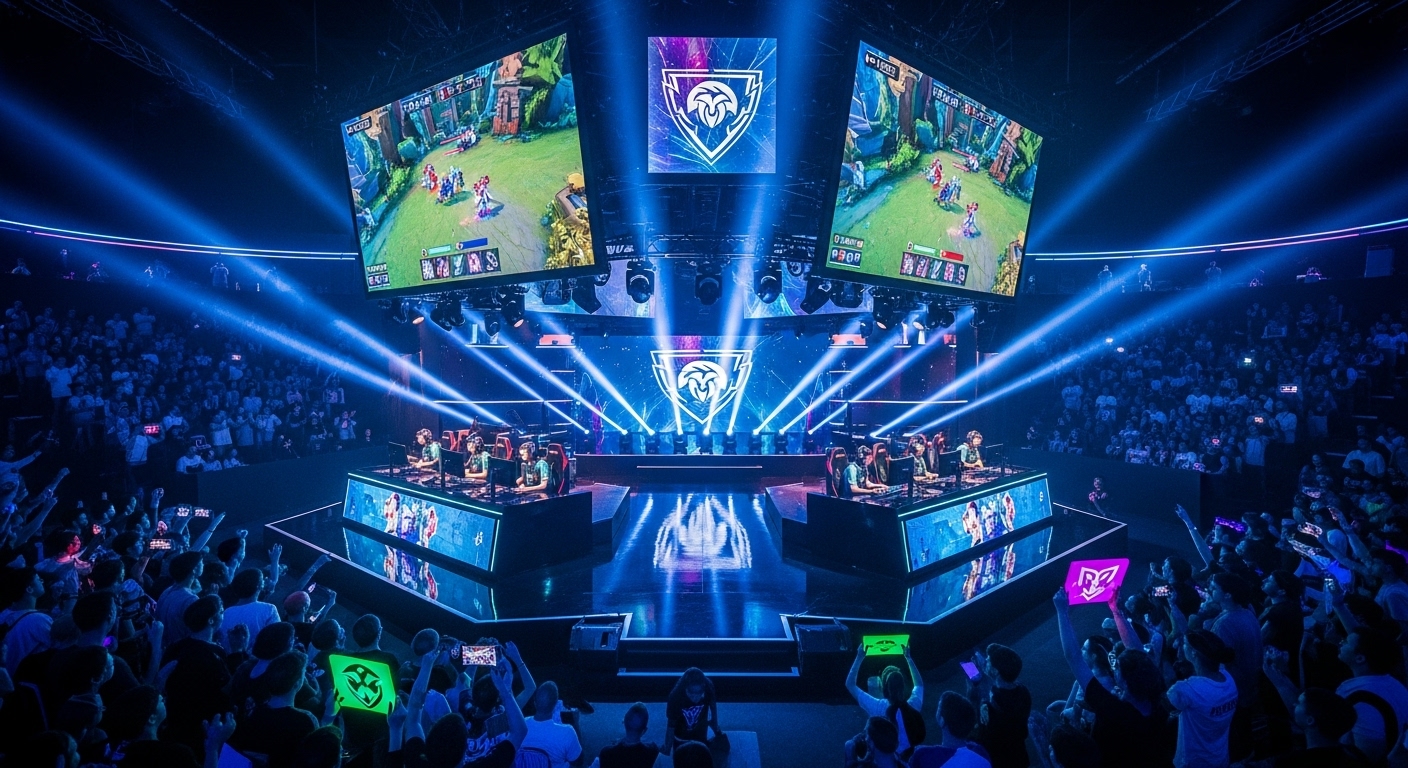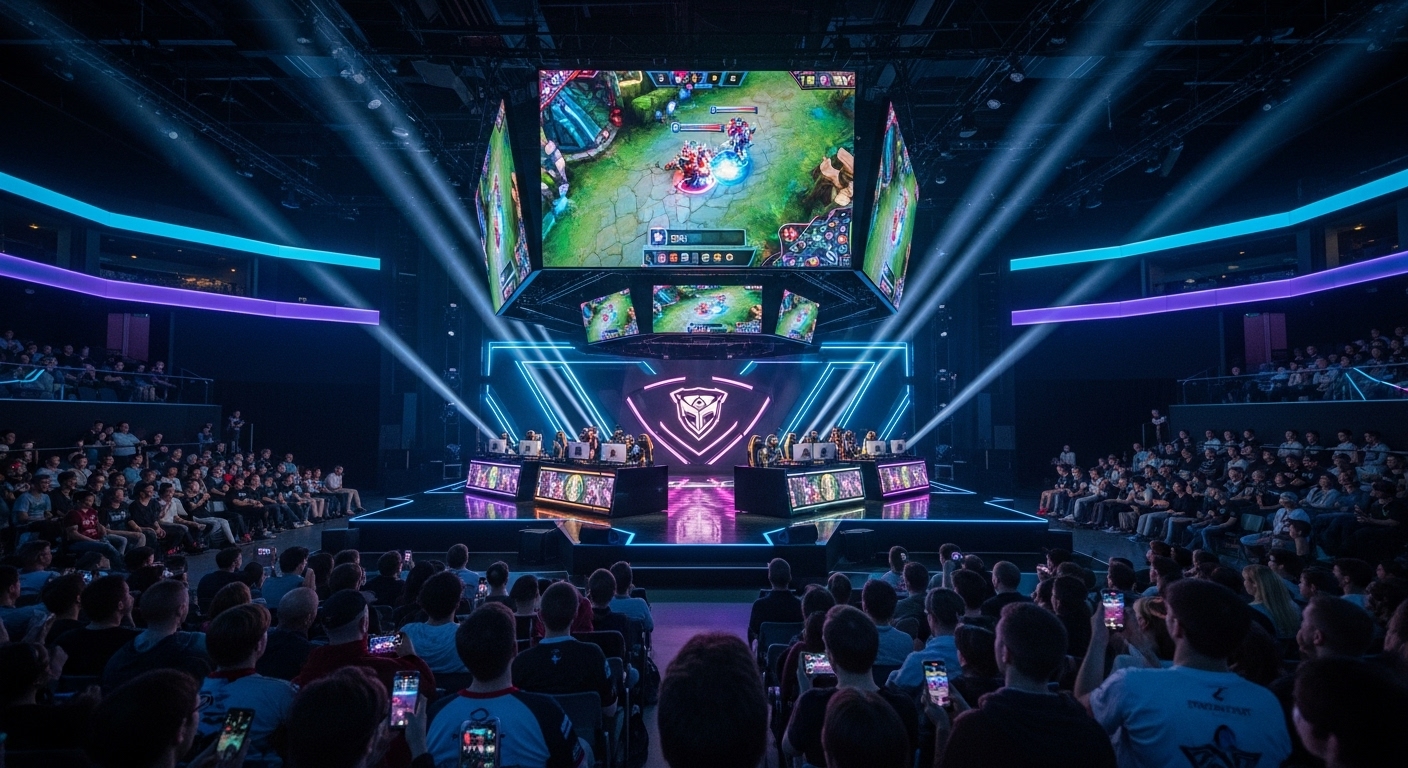

In recent years, esports has transformed from a niche hobby into a global phenomenon, captivating millions of fans and players alike. What was once seen as “just a game” has evolved into a multi-billion-dollar industry, complete with professional leagues, sponsorship deals, and international competitions. Esports today isn’t just about playing video games—it’s about entertainment, competition, and a thriving community. In this blog post, we’ll explore the rise of esports, its impact on the gaming world, and its future trajectory as a mainstream form of entertainment.
The Birth of Esports: From Casual Competitions to Global Events
The origins of esports can be traced back to the early 2000s, when competitive gaming began to gain traction on the internet. In those early days, events like LAN (Local Area Network) parties and online tournaments were the primary venues for competitive players to test their skills against one another. Popular games like StarCraft, Warcraft III, and Counter-Strike helped set the foundation for what would later evolve into a massive industry.
By the mid-2000s, esports started to attract more significant attention, particularly in South Korea, where games like StarCraft became a national pastime. The professionalization of competitive gaming began to take shape, with major tournaments like the World Cyber Games and Electronic Sports World Cup providing the platform for players to compete on a global stage.
However, it wasn’t until the rise of streaming platforms like Twitch and the increased visibility of major esports leagues that esports began to achieve mainstream recognition. In just a few short years, esports tournaments began to sell out arenas and attract sponsors from Fortune 500 companies.
The Esports Ecosystem: A Thriving Global Industry
Esports today is a fully-fledged ecosystem that supports a variety of roles, each contributing to the overall success of the industry. It’s no longer just about the players; the esports world encompasses coaches, analysts, broadcasters, content creators, and team managers. This ecosystem has created countless job opportunities and has brought about a new level of professionalism in competitive gaming.
The Players and Teams
At the heart of esports are the players—often highly skilled individuals who dedicate countless hours to perfecting their craft. These players compete in professional leagues for some of the most popular games, such as League of Legends, Dota 2, Counter-Strike: Global Offensive, Valorant, and Fortnite.
Professional esports teams are just like traditional sports teams, with rosters, coaches, and support staff. These teams compete in regional leagues and global tournaments for multi-million-dollar prize pools. The most successful players and teams enjoy worldwide recognition, sponsorship deals, and, in some cases, fame akin to traditional sports athletes.
The Broadcasters and Streaming Platforms
Esports’ growth has been powered in no small part by platforms like Twitch, YouTube Gaming, and Facebook Gaming, where millions of fans tune in to watch live streams of their favorite tournaments and events. Streaming platforms have become a primary means of viewing, as well as an avenue for content creators and streamers to build dedicated communities. Some esports events even fill arenas with tens of thousands of fans and attract millions of online viewers.
Big brands and media networks have also recognized the potential of esports, with traditional sports channels like ESPN broadcasting esports events. This media convergence is crucial in pushing esports into the mainstream, with esports stars becoming household names in the process.
The Sponsors and Brands
Just like traditional sports, sponsorships are an essential revenue stream in the esports ecosystem. Major global brands—such as Coca-Cola, Intel, Mercedes-Benz, and Red Bull—have recognized the immense value in aligning themselves with esports. Sponsorship deals are not limited to teams or players but also extend to major tournaments, leagues, and even esports venues.
Esports has also paved the way for niche brands targeting younger, tech-savvy audiences, with companies in the gaming, tech, and entertainment industries capitalizing on the massive reach of esports to promote their products and services.
The Global Impact of Esports: More Than Just a Game
Esports has grown far beyond its roots as an entertainment platform for gamers; it has become a cultural force in its own right. The rise of esports is reshaping the way people view gaming, as it transforms from a pastime to a legitimate, skill-based competition.
Bridging Cultures Through Competition
One of the unique aspects of esports is its ability to unite people from all around the world. Esports competitions feature players from different countries and cultures, all competing in a shared digital arena. This international nature of esports not only broadens the appeal but also fosters a sense of global community. Whether it’s through online tournaments or live global events like The International (Dota 2) or League of Legends World Championships, esports creates a platform for diverse communities to come together, share in the excitement, and celebrate victories.
Educational and Career Opportunities
Esports has also led to the creation of new educational opportunities, with universities offering scholarships and even establishing dedicated esports programs. In many cases, students can now pursue careers in esports as players, analysts, coaches, and other support roles. Schools and universities are increasingly recognizing the value of competitive gaming, and this is encouraging a new generation to hone their skills in a professional environment.
Esports organizations, in turn, are investing in player development programs, ensuring that talented young individuals have the support they need to succeed. Moreover, some high schools are now incorporating esports into their athletic programs, offering competitive gaming as part of their extracurricular activities.
The Future of Esports: A New Era of Gaming and Entertainment
Looking ahead, the future of esports appears brighter than ever. As technology continues to advance, new opportunities for innovation and growth will emerge. Here are a few key trends to watch for in the coming years:
The Rise of Virtual Reality and Augmented Reality Esports
With advancements in virtual reality (VR) and augmented reality (AR), we may soon see a new wave of immersive esports experiences. VR and AR technologies have the potential to create more interactive and dynamic competitions, offering players and viewers alike an entirely new way to experience esports events. Games that allow players to interact in a fully immersive virtual space could soon redefine what we understand as competitive gaming.
Increased Mainstream Acceptance
Esports is already growing in popularity, but as it continues to mature, it may see increased acceptance in traditional media, entertainment, and even education. More broadcasters, networks, and advertisers are likely to jump on the esports bandwagon, while esports might even find a place in the Olympics or other major sporting events.
The growth of esports betting and fantasy esports leagues is another indication of how the industry is reaching new heights, attracting a broader range of viewers and participants.
Mobile Esports and the Expanding Global Reach
The mobile gaming market is growing at an exponential rate, and mobile esports is following suit. Games like PUBG Mobile, Mobile Legends, and Clash Royale are gaining huge followings, especially in regions like Southeast Asia and India. As smartphones become more powerful and accessible, mobile esports will likely continue to expand, making competitive gaming available to a global audience with diverse backgrounds and varying levels of resources.
Conclusion: The Rise of Esports as a Cultural Mainstay
Esports has firmly established itself as a major cultural force in the world of entertainment. What started as a hobby for a select few has now become a multi-billion-dollar industry that bridges the gap between gaming and professional sports. With millions of fans worldwide, high-profile tournaments, and significant financial backing, esports is poised for even greater growth in the coming years.
As the industry evolves, we can expect more innovation, higher levels of competition, and greater integration into the fabric of mainstream entertainment. For now, one thing is certain—esports is here to stay, and its influence on the gaming world is only going to grow. Whether you’re a player, a fan, or someone new to the scene, the digital arena is a place where everyone can come together to witness the next chapter in the history of competitive gaming.
Get smarter responses, upload files and image