
Introduction: The Birth of a Digital Phenomenon
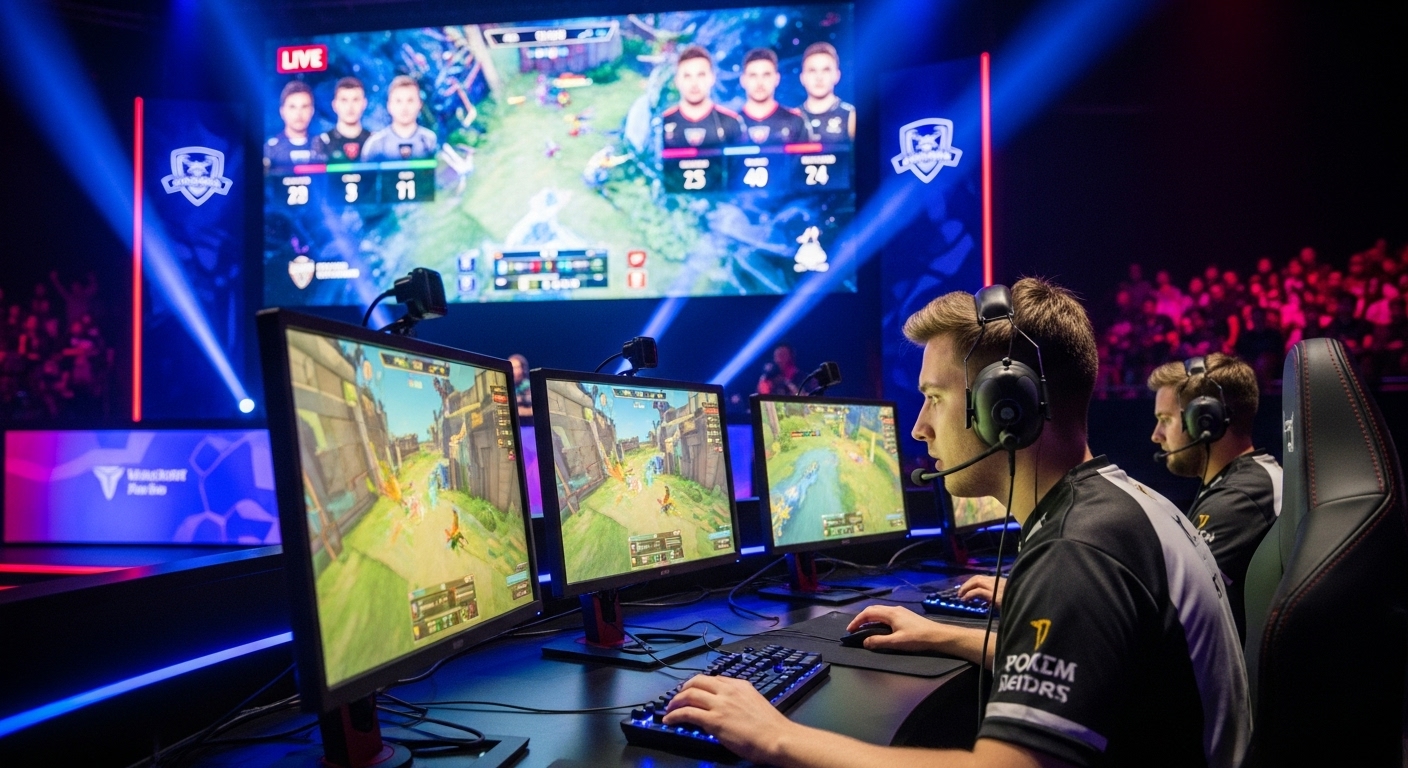
In the past few decades, human entertainment has undergone a revolutionary transformation. What once began as a simple pastime has evolved into a global phenomenon that commands millions of viewers, billions of dollars in investment, and worldwide recognition. This revolution is known as Esports. Once considered a niche hobby, Esports has now become a full-fledged competitive industry where skilled players battle on virtual fields, cheered on by massive audiences both online and offline.
The word “Esports” stands for “electronic sports,” referring to organized, competitive video gaming. Whether it’s a team-based multiplayer strategy game, a solo battle arena, or a tactical first-person shooter, Esports encompasses a broad range of genres and titles. Players no longer compete just for bragging rights — they compete for fame, sponsorships, and prize pools that rival those of traditional sports tournaments.
From Arcades to Arenas: A Brief History of Esports
The roots of Esports can be traced back to the late 20th century. In the early 1980s, when arcade games like Space Invaders and Pac-Man dominated the gaming landscape, informal competitions began popping up. One of the earliest recognized video game competitions was the Space Invaders Championship in 1980, organized by Atari. It attracted more than ten thousand participants and marked the first time gaming was seen as a public competitive event.
The 1990s witnessed a dramatic shift. As home computers and gaming consoles became mainstream, online multiplayer gaming started taking shape. Titles like Quake, StarCraft, and Counter-Strike laid the foundation for competitive play, where players from around the world could battle in real-time. LAN parties became the birthplace of organized tournaments, creating a culture of teamwork, strategy, and competition.
By the early 2000s, broadband internet opened the door for global competition. South Korea became the early epicenter of Esports, with StarCraft players achieving celebrity status. Dedicated Esports channels aired live matches, and gaming cafes became training grounds for aspiring pros. It was clear: Esports was no longer just a pastime. It was becoming a profession.
The Global Explosion: How Esports Took Over the World
The 2010s marked the golden age of Esports expansion. Titles like League of Legends, Dota 2, Overwatch, and Fortnite revolutionized competitive gaming. These games were designed with Esports in mind — balanced gameplay, spectator modes, and structured tournaments. Companies like Riot Games and Valve began investing heavily in professional leagues, prize pools, and broadcasting infrastructure.
The League of Legends World Championship became an annual spectacle, filling entire stadiums and drawing millions of viewers online. Valve’s The International broke records with its community-funded prize pool, surpassing tens of millions of dollars. Meanwhile, Fortnite introduced a younger generation to Esports with massive events that blended gaming with mainstream entertainment.
Streaming platforms such as Twitch and YouTube Gaming played a crucial role in this growth. Players no longer had to rely on traditional media coverage — they could broadcast their matches directly to fans around the world. The result was a democratization of viewership and opportunity. Gamers could build personal brands, attract sponsorships, and earn a living by showcasing their skill.
Professionalism and Structure: Esports as a Career Path
One of the most fascinating aspects of Esports is how it transformed from informal competitions into structured professional ecosystems. Today, top players train with coaches, analysts, and nutritionists. Teams have dedicated management, psychologists, and marketing departments. The infrastructure mirrors that of traditional sports organizations.
Professional leagues such as the Overwatch League, Call of Duty League, and Valorant Champions Tour introduced franchising systems. This brought stability and long-term investment opportunities to the industry. Players now sign contracts, negotiate salaries, and even receive health benefits in some cases. Esports organizations like Team Liquid, Fnatic, and Cloud9 operate like sports franchises with global fanbases.
The average career of a professional gamer is intense but short-lived, usually lasting from late teens to mid-twenties. This is due to the physical and mental demands of high-level gaming — reflexes, concentration, and strategy all need to be razor-sharp. Yet, even after retiring from active play, many pros transition into coaching, streaming, or commentary, maintaining their place within the industry.
The Role of Technology: Powering the Digital Arena
Technology has always been the heartbeat of Esports. Every advancement in hardware, software, and connectivity has pushed the boundaries of what’s possible. High-performance gaming PCs, low-latency monitors, and optimized peripherals give players the precision they need to compete at the highest level. On the software side, developers continuously refine balance, anti-cheat systems, and matchmaking algorithms to maintain fairness and excitement.
Cloud computing and 5G connectivity are opening new horizons. Players can now compete seamlessly from different parts of the world with minimal lag. Virtual reality (VR) and augmented reality (AR) are beginning to blend digital and physical experiences, hinting at the next generation of immersive Esports.
Streaming technology, too, has evolved dramatically. Real-time broadcasting, live statistics overlays, and professional production values have made Esports viewing comparable to — and sometimes more engaging than — traditional sports broadcasting. Fans can watch from multiple camera angles, view instant replays, and interact with commentators and players in real time.
The Economics of Esports: Beyond the Prize Pools
The business side of Esports is massive. What started as small community tournaments has grown into a billion-dollar industry. Revenue streams come from various sources — sponsorships, advertising, media rights, merchandise, ticket sales, and in-game purchases. Major brands, from energy drinks to luxury car manufacturers, have entered the Esports space, seeking to connect with the digital-native generation.
Sponsorships form the backbone of team revenue. Companies align their brands with gaming’s youthful, tech-savvy audience. Tournaments are broadcast globally, providing exposure that traditional advertising channels struggle to match. Meanwhile, game publishers benefit from sustained player engagement, as Esports keeps their titles relevant and active.
Investors are increasingly treating Esports organizations like startups or entertainment companies. Franchise spots in major leagues can cost millions, reflecting the belief that Esports is a long-term growth industry. Universities and colleges have even begun offering Esports scholarships, further legitimizing gaming as a career path.
Esports and Education: The Academic Side of Gaming
In the last few years, Esports has entered the world of education. Schools and universities are recognizing the strategic, cognitive, and social skills developed through competitive gaming. Many institutions now have dedicated Esports programs, offering degrees in game design, digital marketing, and team management.
Students learn not only to play but also to analyze gameplay, produce live broadcasts, and manage Esports organizations. This educational approach helps bridge the gap between gaming as a hobby and Esports as a viable industry. Tournaments are also used to foster teamwork, leadership, and problem-solving skills among students.
Moreover, Esports offers an inclusive space for individuals who may not fit into traditional sports environments. It provides a sense of community, achievement, and identity, encouraging diversity and innovation.
The Cultural Impact of Esports: A Global Movement
Esports has become more than competition; it’s a cultural movement. Gaming influencers have achieved celebrity status comparable to film stars and athletes. Music, fashion, and entertainment have all intertwined with Esports culture. From high-profile collaborations with rappers and DJs to Esports-themed clothing lines, the influence is undeniable.
Major events like the League of Legends World Championship or Fortnite World Cup feel more like concerts than tournaments, blending performance art, storytelling, and gameplay. Esports has become an integral part of pop culture, shaping how younger generations interact with entertainment.
The inclusivity of Esports also stands out. Unlike traditional sports, where physical attributes often play a limiting role, Esports welcomes anyone with talent, strategy, and dedication. Gamers from every continent, speaking different languages, compete on equal footing. This global connectivity is one of Esports’ most beautiful characteristics.
Challenges Facing the Esports Industry
Despite its rapid rise, Esports faces several challenges. The industry is still relatively young and continuously evolving. One major concern is player burnout. The pressure to perform, combined with long hours of practice and constant travel, can lead to stress and mental fatigue. Organizations are beginning to prioritize player well-being, but more structured support systems are needed.
Another issue is the lack of standardized regulation. Unlike traditional sports governed by bodies such as FIFA or the NBA, Esports lacks a unified authority. Each game developer sets its own rules, leading to inconsistencies in tournament structures and player rights. As the industry matures, a standardized regulatory framework will be essential to ensure fairness and sustainability.
Monetization also presents challenges. While viewership numbers are impressive, converting those numbers into consistent revenue remains a work in progress. Not every Esports title can sustain long-term interest, and the rapid pace of technological change means audiences can shift quickly from one game to another.
Toxicity and cheating are other hurdles. Online anonymity can lead to negative behavior, and maintaining sportsmanship in digital spaces is an ongoing battle. Anti-cheat technologies and stricter codes of conduct are helping to mitigate these issues, but the work is far from complete.
Women in Esports: Breaking Boundaries
For many years, Esports was viewed as a male-dominated arena, but that narrative is changing. Female gamers and teams are gaining recognition and respect across various titles. Tournaments specifically designed to promote inclusivity have helped highlight female talent, while mixed-gender competitions are becoming more common.
Women such as Sasha “Scarlett” Hostyn, Geguri, and Hafu have broken barriers, inspiring countless others to pursue competitive gaming careers. Organizations are increasingly addressing gender inequality by offering mentorship programs, community initiatives, and equal representation in leadership roles.
The rise of women in Esports is not just about diversity; it’s about broadening the industry’s creative and competitive horizons. As the Esports ecosystem continues to grow, inclusion will remain key to its global appeal.
The Future of Esports: Where Do We Go From Here?
Looking ahead, the future of Esports appears brighter than ever. Technological advancements will continue to drive innovation, from virtual reality tournaments to fully immersive fan experiences. Artificial intelligence may soon play a role in training and strategy development, helping players refine their techniques through data-driven insights.
The line between Esports and traditional sports will blur further. Hybrid events, where physical and digital competition coexist, are already being tested. Cities are investing in dedicated Esports arenas, signaling that digital sports are here to stay as a permanent part of global entertainment.
Esports will also play a significant role in the metaverse — a shared virtual world where gaming, social interaction, and commerce intersect. Players might soon compete in dynamic, evolving digital environments, attended by fans through avatars instead of physical seats.
Perhaps most importantly, Esports will continue to connect people. It transcends geography, language, and culture, uniting millions under the shared thrill of competition. In a world where technology often isolates, Esports proves it can also bring people together.
Conclusion: The New Age of Sports
Esports has come a long way from its humble beginnings in dimly lit arcades and basement LAN parties. It has transformed into a global spectacle that defines modern entertainment, technology, and youth culture. Its influence spans industries — from education and business to media and fashion — and its community continues to grow stronger with each passing year.
As traditional sports evolve to adapt to digital audiences, Esports stands at the forefront of this transformation. It represents the future of competition, where skill, creativity, and innovation merge in real time. The digital arena is no longer a fantasy; it’s the new frontier of athleticism, strategy, and storytelling.
Esports is more than gaming. It’s a celebration of human potential in the virtual age — a powerful reminder that passion and talent can flourish in any form, even in pixels and code. Whether you are a player, a fan, or a curious observer, one thing is certain: the Esports revolution is here to stay, and its next chapter is only just beginning.