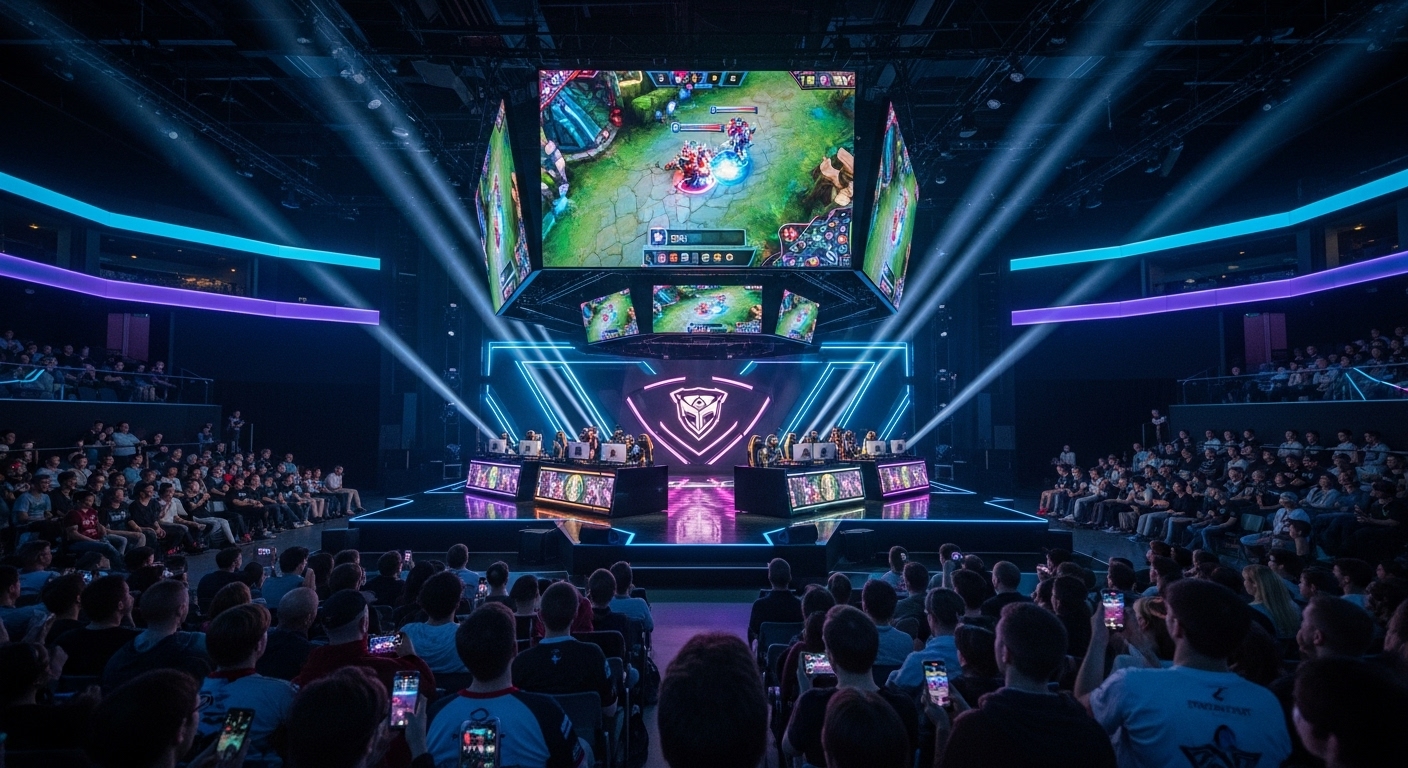
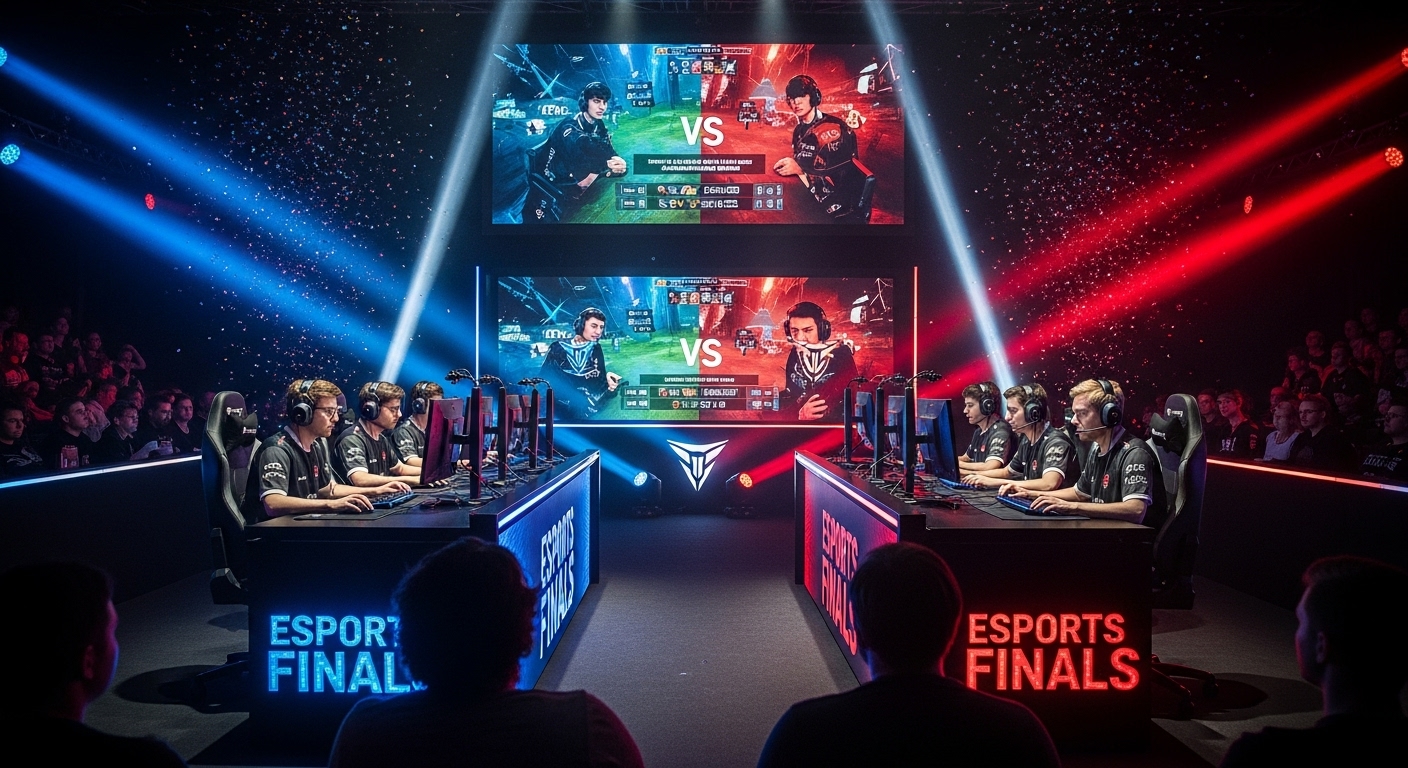
Esports, once a niche hobby enjoyed by a small community of passionate gamers, has evolved into a global phenomenon. What was once considered a pastime has now become a multi-billion-dollar industry that rivals traditional sports in terms of viewership, fan engagement, and revenue. The rise of esports has been nothing short of spectacular, transforming gaming from a casual activity into a serious competitive pursuit with professional players, teams, and large-scale tournaments. In this blog post, we will delve into the world of esports, exploring its history, growth, impact on global entertainment, and future potential.
The Origins of Esports: From Arcade Games to Global Competitions
Esports didn’t appear overnight—it has roots that go back several decades. In the early days of gaming, competitive play was limited to local tournaments and small gatherings. The late 1970s and early 1980s saw the birth of arcade games like Pong, Space Invaders, and Pac-Man, which became the foundation for future gaming competitions. These games often had high-score tables, and players would compete to see who could achieve the best score. Though informal, this laid the groundwork for the competitive spirit that would define esports in the years to come.
The first major milestone in esports came in the early 1990s with the advent of networked multiplayer games. Titles such as Doom and Quake allowed players to compete against each other over local area networks (LANs), creating a more formalized structure for competitive gaming. The year 1997 saw the first esports tournament—the Red Annihilation tournament for Quake—which offered a $1,000 cash prize and is widely considered the beginning of organized esports competitions.
In the years that followed, the internet’s expansion paved the way for online multiplayer games, and games like StarCraft, Warcraft III, and Counter-Strike became the foundation for what we now know as esports. These games introduced the concept of professional teams, sponsorships, and tournaments, setting the stage for the modern esports scene.
The Explosive Growth of Esports: From Hobby to Industry
By the early 2000s, esports began to mature into a serious industry. One of the key factors driving this growth was the increasing popularity of streaming platforms. The launch of platforms like Twitch in 2011 allowed gamers to broadcast their gameplay live to a global audience, turning competitive gaming into a spectator sport. As viewership grew, so did sponsorships and prize pools, with big brands such as Intel, Coca-Cola, and Red Bull stepping into the arena.
Esports tournaments became larger, more organized, and more lucrative. Events such as The International for Dota 2, the League of Legends World Championship, and CS:GO Major Championships began to offer multi-million-dollar prize pools, attracting top-tier talent from around the world. These tournaments weren’t just about the players; they also attracted massive global audiences. In fact, some of these events now draw viewership numbers that rival traditional sports leagues like the NFL or NBA Finals.
The success of esports tournaments and leagues highlighted the growing demand for professional gaming and created a feedback loop where more players and viewers joined the ecosystem. Teams, sponsors, and tournament organizers began to invest more in the scene, further accelerating its expansion. The esports industry, which was worth an estimated $1.1 billion in 2019, continues to grow, with projections indicating it will reach $1.6 billion by 2024.
Esports and the Rise of Professional Players and Teams
One of the key components of esports is the professional player. Just as in traditional sports, professional gamers dedicate their time to perfecting their skills and competing at the highest level. These players often train for hours every day, mastering their chosen game, developing strategies, and refining their teamwork. In fact, esports players may have an even more rigorous training schedule than many professional athletes, due to the constant evolution of games and the need to stay ahead of the competition.
Top esports players are often treated like celebrities. They can earn substantial salaries from tournament winnings, sponsorship deals, and streaming platforms. The highest-earning esports players, such as Johan “N0tail” Sundstein from Dota 2 and Kenny “kennyS” Schrub from Counter-Strike: Global Offensive, have amassed millions of dollars in earnings throughout their careers. Many also supplement their incomes by streaming on platforms like Twitch and YouTube, where fans can watch them play live and engage with them directly.
Professional esports teams have also become a cornerstone of the industry. Organizations like Cloud9, Team Liquid, Fnatic, and T1 have developed large fanbases and cultivated top-tier talent. These teams represent a wide variety of games, including League of Legends, Valorant, Overwatch, Counter-Strike: Global Offensive, and more. Much like traditional sports teams, esports organizations sign players, invest in coaching staff, and create training facilities to ensure their athletes perform at their best.
These teams compete in a variety of domestic and international leagues, as well as in high-profile tournaments. As esports continues to evolve, many of these teams have expanded into multiple games, similar to how a professional sports team might have football, basketball, and soccer divisions. For instance, Cloud9 has teams competing in League of Legends, Valorant, Rocket League, and Super Smash Bros.
The Esports Fanbase: A Global Community
The appeal of esports goes beyond just the players—it extends to the millions of fans who watch, follow, and support their favorite teams, players, and tournaments. The esports community is a global one, with fans hailing from every corner of the world. The growth of esports has created a new kind of fandom, where individuals from different cultures, backgrounds, and countries can come together over a shared love of gaming.
Esports fans are known for their passion and dedication. Whether they’re tuning into live streams, attending LAN events, or following their favorite teams on social media, esports fans are incredibly engaged with the scene. Online platforms like Twitch and YouTube have become central hubs for fans to interact with one another, watch live matches, and discuss strategies. These platforms have also created a new form of entertainment, where fans can interact with players and personalities directly, adding a personal layer to the esports experience.
In addition to watching live events, many fans participate in esports through fan communities, fantasy leagues, and betting. Esports betting, in particular, has grown significantly, with fans betting on the outcome of tournaments and individual matches. This interaction between fans and the esports industry has helped foster a sense of connection and loyalty, building a thriving, interactive fanbase that drives the industry forward.
The Integration of Esports and Traditional Sports
Esports has often been compared to traditional sports in terms of organization, competition, and fan culture. This comparison has led to increased integration between the two. Many traditional sports organizations have begun to invest in esports, recognizing its potential as a growing industry. For instance, the NBA has launched the NBA 2K League, a professional esports league centered around the NBA 2K video game. Similarly, football clubs like Manchester City and Paris Saint-Germain have established esports divisions, with teams competing in games like FIFA and League of Legends.
The mainstream recognition of esports has also led to partnerships between esports organizations and traditional sports media outlets. Major sports networks like ESPN have started broadcasting esports events, while companies like Riot Games (the creator of League of Legends) have collaborated with sports organizations to bring more attention to their tournaments. The intersection of esports and traditional sports has opened up new avenues for growth, bringing esports to an even wider audience.
Moreover, some esports tournaments now take place in traditional sports venues, such as basketball arenas and football stadiums. The League of Legends World Championship, for example, has been hosted in iconic venues such as the Bird’s Nest in Beijing and the AccorHotels Arena in Paris. This integration has further solidified esports as a mainstream form of entertainment.
The Future of Esports: Opportunities and Challenges
The future of esports looks incredibly promising. As technology continues to advance, new opportunities will arise for the esports industry to grow and innovate. The rise of virtual and augmented reality, for example, could revolutionize gaming and esports by offering more immersive experiences. Additionally, 5G technology could enhance streaming quality and make it easier for fans to watch live events from anywhere in the world, improving accessibility and engagement.
Esports is also likely to continue expanding into new markets, particularly in regions like Asia, South America, and the Middle East, where gaming culture is rapidly growing. As more people gain access to high-speed internet and affordable gaming hardware, esports will become even more accessible, further fueling its global appeal.
However, there are still challenges that need to be addressed. Issues such as player burnout, cheating, and sustainability of team contracts remain prevalent in the esports ecosystem. Moreover, the rise of esports gambling and betting has raised concerns about addiction and match-fixing, which could tarnish the integrity of the industry. To ensure continued success, the esports industry will need to implement effective regulations, ensure the well-being of players, and maintain the integrity of competitive play.
Conclusion
Esports has come a long way since its humble beginnings in the 1990s. What was once a small, niche hobby has blossomed into a global industry with millions of fans, professional players, and major sponsors. The growth of esports has been fueled by technological advancements, the rise of streaming platforms, and the increasing popularity of competitive gaming. With its passionate fanbase, thriving professional scene, and exciting potential for the future, esports is no longer just a game—it’s a global entertainment powerhouse. As the industry continues to evolve, esports will undoubtedly continue to captivate audiences and shape the future of competitive gaming.